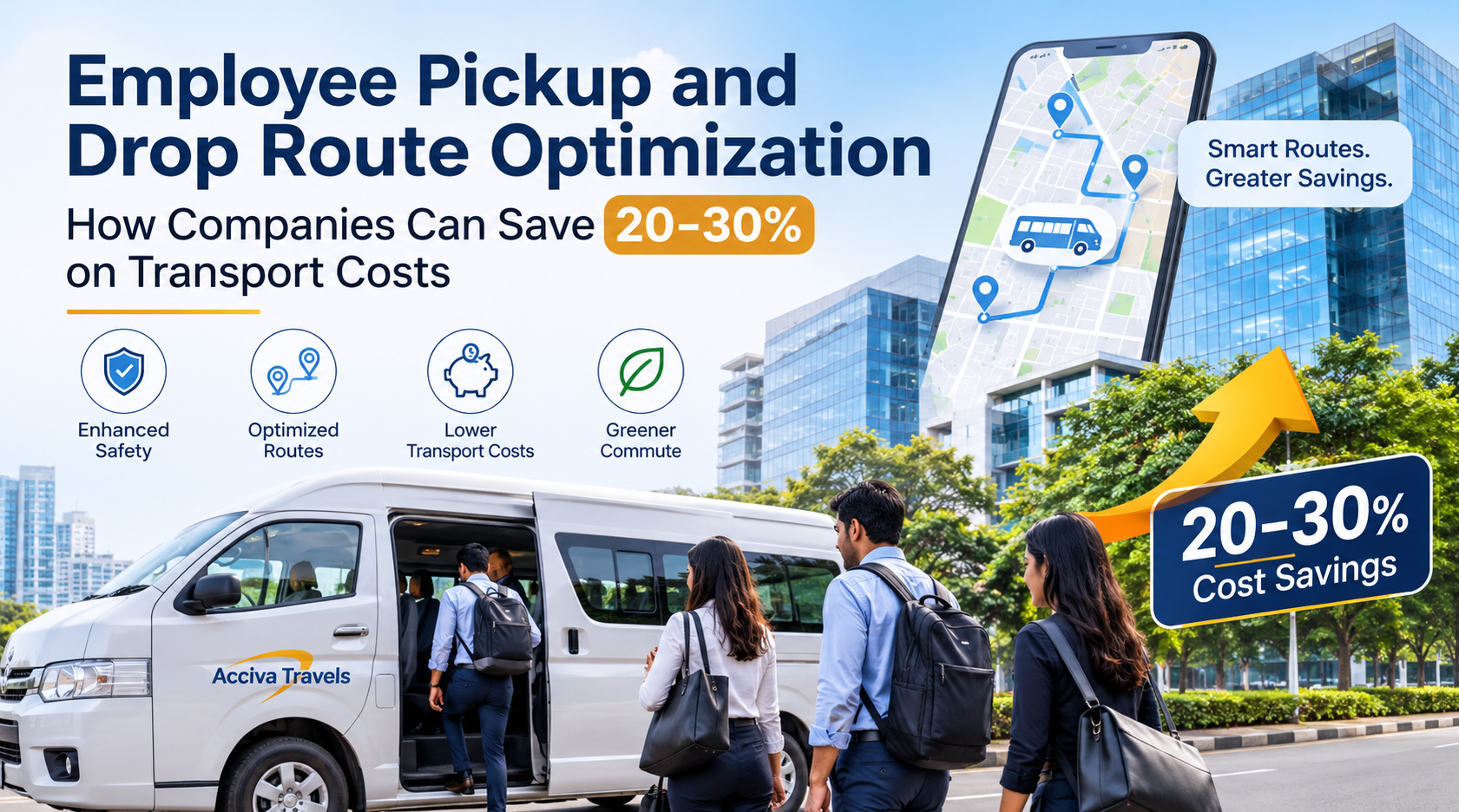
Managing employee transportation is an important responsibility for businesses with large workforces. Efficient office pickup and drop services in Bangalore can help organisations improve daily commuting, reduce unnecessary vehicle usage and manage transportation expenses through better route planning.
In a busy business environment like Bangalore, employees travel from different residential areas to office locations such as Electronic City, Whitefield, Marathahalli, Outer Ring Road and Manyata Tech Park. Without proper coordination, companies may end up operating multiple vehicles along overlapping routes, increasing fuel consumption, travel time and fleet expenses.
Route optimisation offers a practical way to address these challenges. By combining employee location mapping, vehicle allocation, shift scheduling and technology-enabled monitoring, businesses can build a more organised transportation system. Depending on existing inefficiencies, these improvements may create opportunities to work towards 20–30% transportation savings, although actual results vary by organisation.
Why Employee Transportation Requires More Than Cab Bookings
Booking individual cabs may solve immediate travel requirements, but managing daily employee commuting involves several operational responsibilities.
Companies need to coordinate passenger locations, vehicle capacity, driver availability, pickup schedules and changing traffic conditions. Managing these activities manually can become complicated as employee numbers increase.
Some common challenges include:
Multiple vehicles travelling through similar routes.
Low passenger occupancy and underutilised vehicles.
Unplanned pickup schedules and unnecessary detours.
Delays caused by peak-hour traffic.
Difficulty monitoring daily transportation expenses.
Limited visibility into vehicle movement and trip completion.
A structured employee transportation programme helps businesses coordinate these requirements instead of treating every journey as a separate booking.
6 Practical Ways to Optimise Employee Pickup and Drop Routes
1. Group Employees Based on Residential Locations
Employee location mapping is an important starting point for route optimisation.
Companies can identify employees living in nearby neighbourhoods and organise shared pickup routes based on their office destinations and reporting times.
For example, employees travelling from Marathahalli, Bellandur and Sarjapur Road may be grouped into suitable routes where passenger locations and shift schedules allow.
This approach can reduce overlapping journeys, improve vehicle occupancy and make daily transportation easier to coordinate.
2. Allocate Vehicles According to Passenger Capacity
Using the same vehicle category for every route may result in inefficient fleet utilisation.
A route with two or three employees may require a smaller vehicle, while a larger group travelling along a similar corridor may benefit from a higher-capacity vehicle.
Companies should consider passenger numbers, luggage requirements, route conditions and travel distance before assigning vehicles.
Suitable vehicle allocation helps avoid unnecessary vehicle deployment and supports better fleet management.
3. Coordinate Routes with Employee Shift Timings
IT companies, BPOs, manufacturing facilities and corporate offices often operate multiple shifts.
Transportation schedules should reflect employee reporting times, departure times and expected journey durations.
A well-organised schedule can help companies coordinate vehicles across different shifts while maintaining reasonable pickup windows.
This also reduces unnecessary waiting periods for employees and drivers.
4. Use Technology for Route Planning
Digital transportation platforms can simplify route creation and daily scheduling.
AI-powered route optimisation systems can analyse employee locations, traffic conditions, vehicle capacity and pickup requirements to recommend suitable travel routes.
When employee schedules change, transportation managers can update routes based on the latest requirements.
Technology can also help identify repeated delays, unnecessary kilometres and underutilised vehicles.
5. Monitor Vehicles Through GPS Tracking
GPS tracking provides transportation managers with real-time visibility into fleet operations.
Businesses can use tracking systems to monitor:
Current vehicle locations.
Pickup and drop progress.
Route deviations.
Estimated arrival times.
Unexpected traffic delays.
Trip completion status.
This information helps transportation teams respond to delays, communicate with employees and maintain better control over daily operations.
6. Review Transportation Data Regularly
Route optimisation should be an ongoing process rather than a one-time activity.
Companies can evaluate important performance indicators to understand whether their transportation arrangements are working efficiently.
Performance Indicator | Purpose |
Vehicle occupancy | Measures available seating utilisation |
Cost per trip | Tracks transportation expenditure |
Distance travelled | Identifies unnecessary kilometres |
On-time pickup rate | Evaluates scheduling reliability |
Vehicle utilisation | Measures fleet efficiency |
Average journey duration | Helps improve route planning |
Regular reviews allow businesses to identify operational problems and make adjustments based on actual travel data.
How Can Route Optimization Help Companies Save 20–30%?
A 20–30% reduction in transportation expenditure can be an optimisation target for organisations with inefficient routes, low passenger occupancy or unnecessary vehicle deployment. It should not be considered a guaranteed saving or a universal industry benchmark.
Consider a hypothetical company operating multiple employee transportation routes across Bangalore.
After reviewing its existing arrangements, the company identifies several opportunities:
Two vehicles travelling through overlapping pickup areas.
Some vehicles operate below their passenger capacity.
Unnecessary kilometres caused by poorly planned pickup sequences.
Vehicle schedules that do not match employee shift requirements.
The company introduces shared pickup routes, suitable vehicle allocation and improved scheduling.
These changes may reduce total vehicle kilometres and improve fleet utilisation.
To measure the actual financial impact, businesses should compare transportation expenditure before and after optimisation. Fuel, driver charges, vehicle rental, maintenance and technology expenses should all be considered.
The objective is to reduce avoidable operational expenditure without compromising employee safety or commuting convenience.
Employee Safety and Chauffeur Professionalism in Corporate Transportation
Transportation efficiency must always be balanced with employee safety.
A reliable employee commuting programme should include verified chauffeurs, vehicle maintenance, GPS tracking and clearly defined emergency procedures.
Important safety measures include:
Background-verified and trained drivers.
Regular vehicle inspections.
Real-time trip monitoring.
Emergency response arrangements.
Defined employee pickup and drop procedures.
Appropriate safety protocols for women employees.
Clear communication during unexpected delays.
Professional chauffeurs also contribute to a more comfortable and predictable commuting experience.
How Employee Commute Solutions Support Sustainable Mobility
Well-planned transportation can contribute to environmental sustainability by reducing unnecessary vehicle movement and improving passenger occupancy.
Businesses can also explore electric vehicles when charging infrastructure, route distance and operational requirements make them suitable.
Combining efficient route planning with EV adoption can support corporate environmental goals while improving transportation management.
Modern Employee commute solutions Bangalore should therefore consider not only travel efficiency but also passenger experience, vehicle utilisation and environmental impact.
Regular Cab Booking vs Corporate Employee Transportation
Individual cab bookings and professionally managed corporate transportation serve different business requirements.
Regular Cab Booking | Corporate Employee Transportation |
Individual journey arrangements | Organised employee travel schedules |
Separate trip management | Centralised transportation management |
Limited passenger grouping | Location-based route planning |
Less fleet-level visibility | GPS-enabled vehicle monitoring |
Individual trip billing | Consolidated corporate billing |
Limited operational reporting | Transportation performance analytics |
Flexible individual bookings | Structured shift-based transportation |
For organisations with recurring employee commuting requirements, a professionally managed system offers better opportunities for planning, monitoring and expense management.
What Should Companies Look for in a Corporate Transportation Partner?
Choosing the right transportation provider is essential for maintaining reliable employee commuting.
Before selecting a partner, businesses should evaluate:
Fleet Availability: The provider should offer suitable vehicle options for different passenger capacities and transportation requirements.
Technology Integration: GPS tracking, digital booking, route planning and reporting capabilities help improve operational visibility.
Driver Professionalism: Chauffeur verification, training and service standards should be clearly established.
Safety Procedures: Emergency support, vehicle maintenance and employee safety protocols are essential.
Operational Flexibility: The provider should be able to accommodate changing employee numbers, shift timings and office locations.
Transparent Billing: Businesses should understand trip charges, additional kilometre charges and reporting arrangements.
Acciva Travels provides corporate transportation options for businesses with different mobility requirements. Organisations can explore its Corporate Car Rental Services, Corporate Cab Services and Daily Employee Commute Services to understand available solutions.
Better Route Planning Creates Smarter Business Mobility
Employee transportation is more than arranging vehicles for daily office commutes. It requires proper coordination of routes, passenger requirements, vehicle capacity, driver schedules and operational expenses.
By introducing intelligent route planning, GPS tracking, data analytics and suitable vehicle allocation, companies can improve fleet utilisation and work towards measurable transportation savings.
For organisations seeking reliable office pickup and drop services in Bangalore, investing in structured employee transportation can support better operational efficiency, safer commutes and a more positive employee experience.
Acciva Travels offers corporate mobility solutions designed to support business travel and employee commuting requirements. If your organisation is looking to improve employee transportation and manage daily commutes more efficiently, contact Acciva Travels to discuss your corporate transportation requirements.
Frequently Asked Questions
1. How can companies reduce employee transportation costs through route optimisation?
Companies can group employees by location, improve vehicle occupancy, select suitable vehicle capacities and eliminate unnecessary travel. Regular performance monitoring helps identify further opportunities to reduce expenses.
2. What are the benefits of office pickup and drop services in Bangalore?
Organised office transportation helps businesses coordinate employee commutes, improve pickup scheduling, monitor vehicles and manage daily travel requirements more efficiently.
3. How does AI improve employee transportation management?
AI-based systems can analyse employee locations, traffic conditions, vehicle availability and shift schedules to recommend suitable routes and improve transportation planning.
4. Why is GPS tracking important for corporate employee transportation?
GPS tracking provides real-time vehicle visibility, helps monitor trip progress, identifies route deviations and supports better communication between transportation teams and employees.
5. How can businesses choose the right employee transportation provider?
Businesses should evaluate vehicle availability, driver verification, safety procedures, GPS tracking, route management, billing transparency and operational support before selecting a provider.